

Rich Text: MILDRED
A conversation with the Bay Area's finest new rock band

Welcome to Rich Text, a new interview series.
Recently, I spoke with Matt Palmquist, Jack Schrott, and Henry Easton Koehler of Mildred, one of the finest new Bay Area bands to emerge in years. Low-key but utterly self-assured, the band’s debut LP “Fenceline” will thrill anyone with a taste for warm country rock, catchy choruses, and/or the work of the late, great David Berman. For more on “Fenceline,” peep my review on Aquarium Drunkard.
Mildred recently completed their first headlining US tour, and they’re currently plotting a fall European leg. During our conversation, which has been edited for length and clarity, Matt, Jack, and Henry spoke with me about stumbling into success by surprise, Fleet Week, Bob Dylan’s Long Hot Summer Tour, the status of the Bay Area scene, and more.
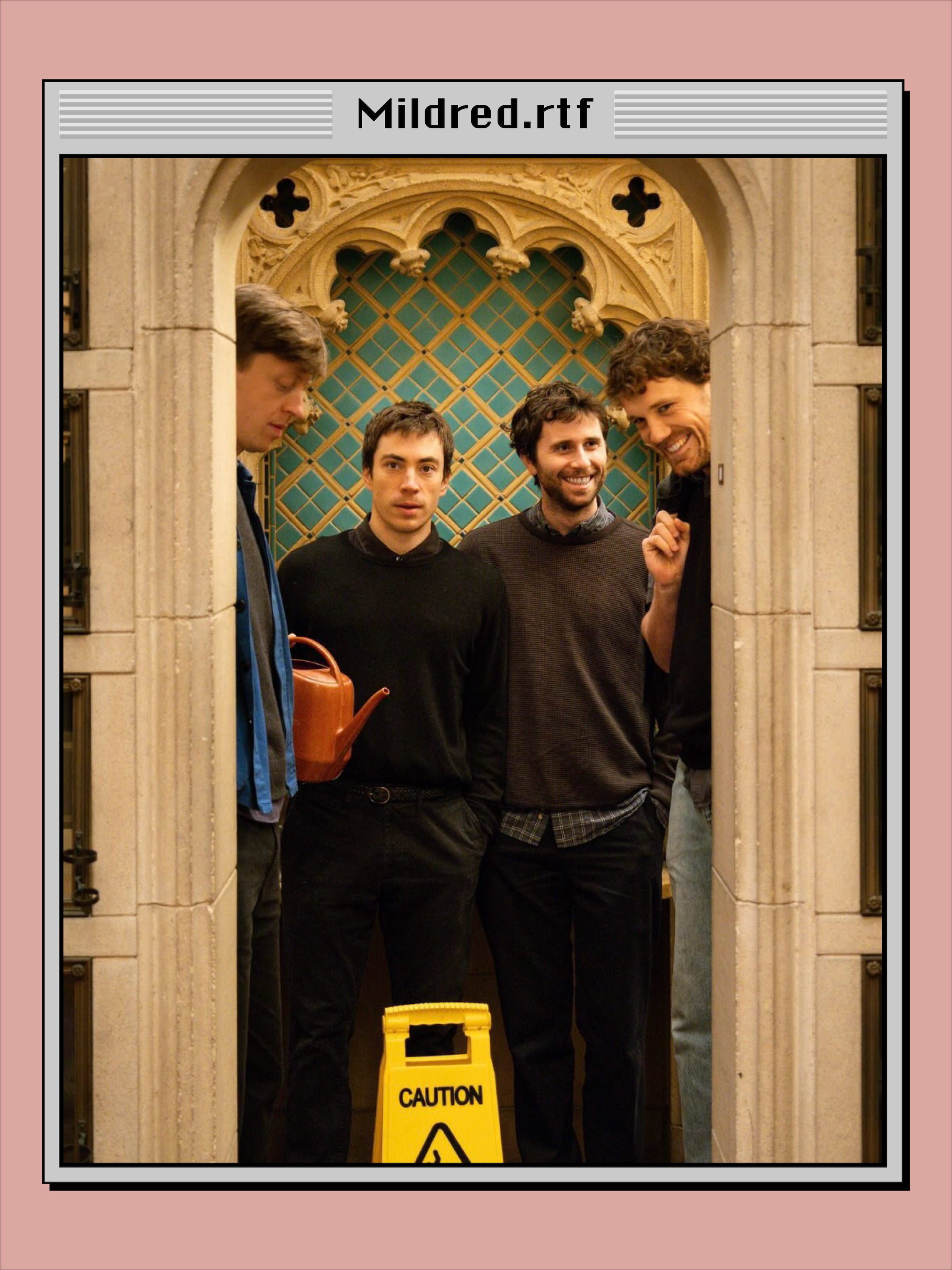
Henry, I saw you at the Bob Dylan show at the Greek Theatre a couple weeks ago. Matt, Jack, I don’t know if you guys were there.
Matt Palmquist: Yeah, we were there.
Thoughts?
Henry Easton Koehler: I went to both nights, as did Matt, as did Will [Fortna, Mildred drummer]. I think Jack came on the second night.
Maybe it was just because it was first, but I was definitely a little more into night one. There was a harmonica solo on “Tryin’ To Get To Heaven,” that really did it for me. And then I was there with my dad who—that’s basically how I learned guitar, was my dad teaching me Bob Dylan songs. So it was a touching thing to see Bob at 85 [years old] with my father.
MP: I’ve missed Dylan in the past, and I [had] some regrets brewing inside of me. So we decided to do the double-header. The last time I had been in his orbit, I feel like it was the one and only time that he came to play in Duluth in Minnesota, where I used to live.
You saw him in Duluth?
MP: Well, so that’s the thing—I didn’t. I was just like, “Why would I go see Bob Dylan?” And like, the whole town went. And I remember feeling very silly about the whole thing, because I was too cool or something. I had the blinders on, I only liked the first couple of albums. I got introduced to him very early, but I didn’t really get into him until much later.
I carry some shame about it. So I needed to make good with the Dylan gods.
You’re atoning, I’m glad to see that. Repentance—this is healthy behavior.
MP: Forgiveness is part of life.
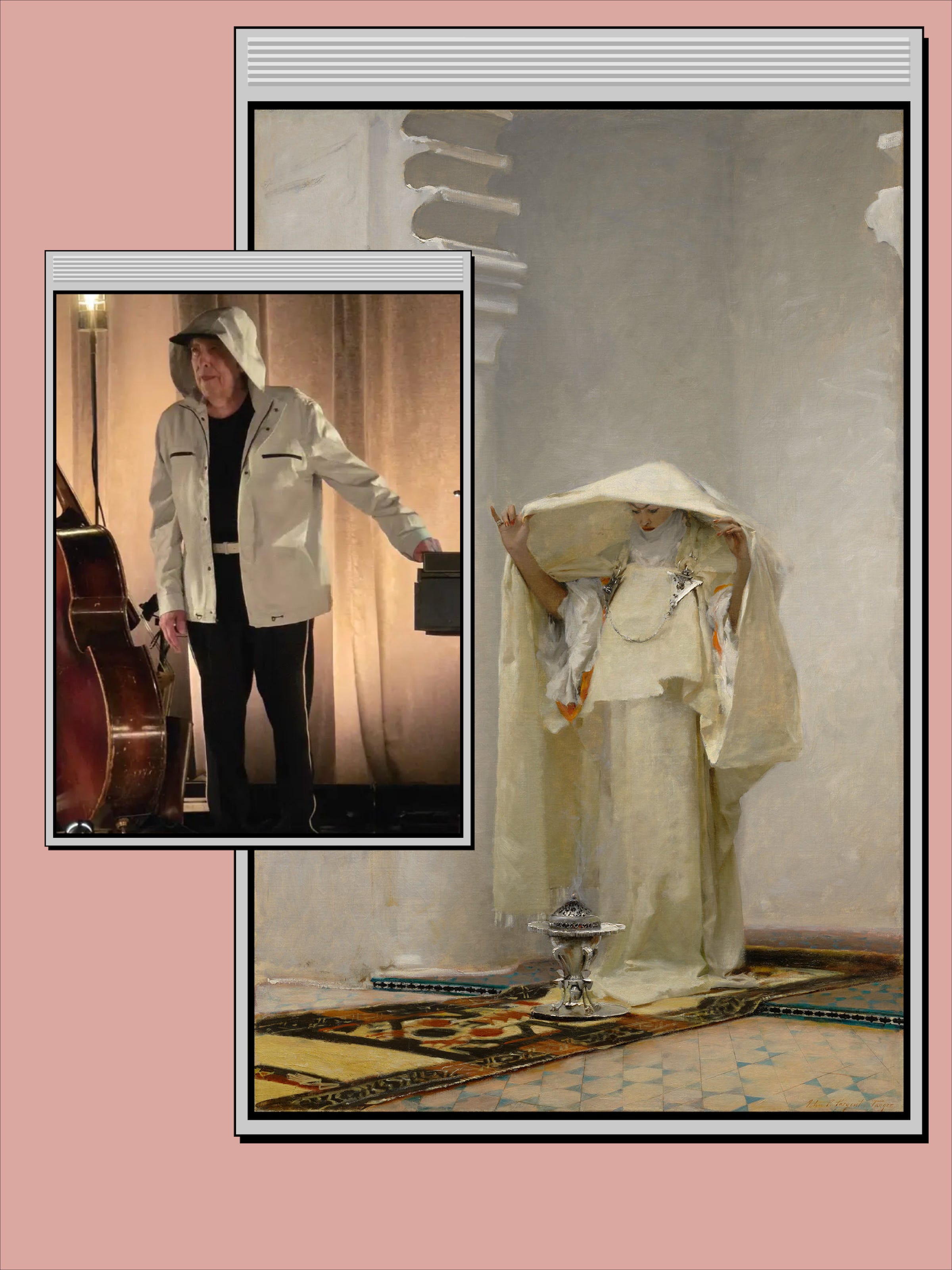
Yeah, no, it was great. I really liked it, it was beautiful. [Bob] reminded me of the priestess in the John Singer Sargent painting, where she’s like this priestess [in white], standing over an incense bowl. But like inverted, you know, with like this modern overlay. It was very cool.
Jack, any takes?
Jack Schrott: Well, it was my inaugural Dylan show.
Welcome.
JS: I feel like being a Dylan fan in Mildred is a pretty high bar to clear, because the other three are kind of sickos. And I love Dylan, but I’m catching up. And yeah, it was great. It was communion with all these amazing [people], just like so many fans of this incredible career. It was cool.
It was a great crowd. I loved all the greybeard granola-ass Berkeley homeowner-types.
HEK: I sat next to this guy, I think his name was Ed. He was wearing a newsboy cap, cargo shorts, and military boots. Grey whiskers on his face. He had a flip phone, and he was texting his friend after every song [telling him] what the song was. And then he would nudge me and be like, “You know that one?”
See, this is the beautiful tapestry of humanity you meet at a Bob Dylan concert.
HEK: Exactly.
How about the Mildred concerts? You guys just wrapped up a tour that coincided with Fenceline popping off a little bit online. How are you feeling?
JS: Tour was amazing. It was the first cross-country headline tour that we’d put together, and it was very much a group effort of like, email blasting a hundred bands in every city and latching onto the two that responded. But we played some really sweet rooms, met cool people in every city, and the response has been pretty surreal so far, to both the shows and the record.
MP: It’s very humbling, you know? I mean, I really like the record.
I hope you do, you made it.
MP: Well, yeah. But I’m really pleased to see people hear the same thing that I hear. That’s always validating. I feel like I’m constantly trying to meter what’s in my head with what’s in the real world. And there’s always such a big gap between those two things. So it’s nice to have the record feel like it’s one to one.
HEK: This tour was the first time we played shows where there’s like, a noticeable amount of people in the crowd that aren’t our friends and have just been spending time with our music independent of knowing us. So that was surreal.
It’s nice to feel like things are building. There’s some energy behind our music and people are reaching out. I think we were always gonna make more music, but it feels like now we’re gonna make more music and more people are gonna hear it, which is really cool.
I’m sensing a degree of surprise from all of you that the record has been so warmly received.
JS: Yeah, I was for sure surprised.
Why?
JS: I just have a sense of how much good music is out there, how many new bands we’re hearing who put amazing stuff out into the wind, which kinda disappears. So having people latch onto [the record], I feel super proud, but also I feel really lucky for just hitting things at the right moment.
Are you guys just thinking day-to-day right now, seeing what comes? Or are you making plans for recording again?
HEK: Kind of all of the above. We’ve got a lot of songs, almost too many songs, so we’re trying to make time to record them. We’re also having conversations with people in the music world and figuring out how much help we need. I think all of us want to keep this thing as low-overhead as possible for as long as possible, or at least we’ve talked about that. So we’re just figuring out what the next step is beyond trying to play more cool shows and record new music.
MP: We’ve got a big stack of things to get through. I think when Fenceline came out, we already felt a little backlogged. You know, these things take time and I think we’re just excited to keep going. Put more stuff out.
How long ago were the songs on Fenceline written? I’m wondering how representative they are of where you guys are in terms of writing voice and recording sensibilities right now.
JS: They were all probably written in 2023 or 2024.
So a few years ago.
MP: Yeah. But there’s always a lag, right? By the time that something gets written and recorded and shipped around to the powers that be, it takes a little bit of time. So I think they’re within the same universe of songs that we’re writing right now.
Which one are each of you most proud of? We’ll go one by one here—Matt?
MP: Man, that’s tough.
I’m very proud of the sensibilities that Henry and Jack have on the album. Occasionally I’ll go back and listen and it just catches me by surprise, even years later. They’re both very good poets, and they have this kinda “normal” sensibility, [or] hypernormal.
I don’t know. In some ways, maybe that’s what I’m most proud of—not a song, but the map, or the territory, that Mildred exists in. That it’s within this aesthetic canon that, weirdly, I think, is unintentional. It’s very nice to participate in something that feels very Pacific, very Northern California. It’s of its own ilk.
I feel that. Henry?
HEK: For the lyrics that I wrote, I think I’m most proud of “UPS Brown,” just in the way it turned out. And then of the songs that I sometimes still go back and listen to from the album, I think “Fleet Week” is just such a beautiful song. I love that it’s about San Francisco, and that it’s funny. It just hits.
“Fleet Week” is a great one. I hate Fleet Week, the actual thing, but “Fleet Week,” the song, is great.
MP: Why do you hate Fleet Week? I mean, besides the obvious imperialist critique…
The Blue Angels, man—too loud. Everyone’s all riled up, people are going down to Crissy Field… it’s just too much.
MP: Has your friend who lives in, like, Cow Hollow ever invited you to their rooftop to come watch?
Literally yes. I’ve done it once, and I never need to do it again.
MP: Ok, fair [laughs].
Jack, how about you? Which song are you most proud of?
JS: “Proud” probably isn’t quite the right word, because I didn’t write it, but I think “UPS Brown” is one of the songs that sticks with me the most. And it’s nice that it’s the first song on the album, because if I were to give somebody one taste of Mildred, that’s the song I want them to hear.
And then of things that I worked on on the album, I would say yeah, I like “Fleet Week” still.
The song, not the thing,
JS: Yeah, the song [laughs].
MP: They’re not mutually exclusive.
JS: The song was born out of my chagrin. I went into San Francisco not knowing that Fleet Week was happening, and I was just so jarred by the experience that I went home and wrote the song.
If you don’t know what’s happening, it’s a jarring experience.
JS: I didn’t even know it was a thing, let alone something that descended on San Francisco every year.
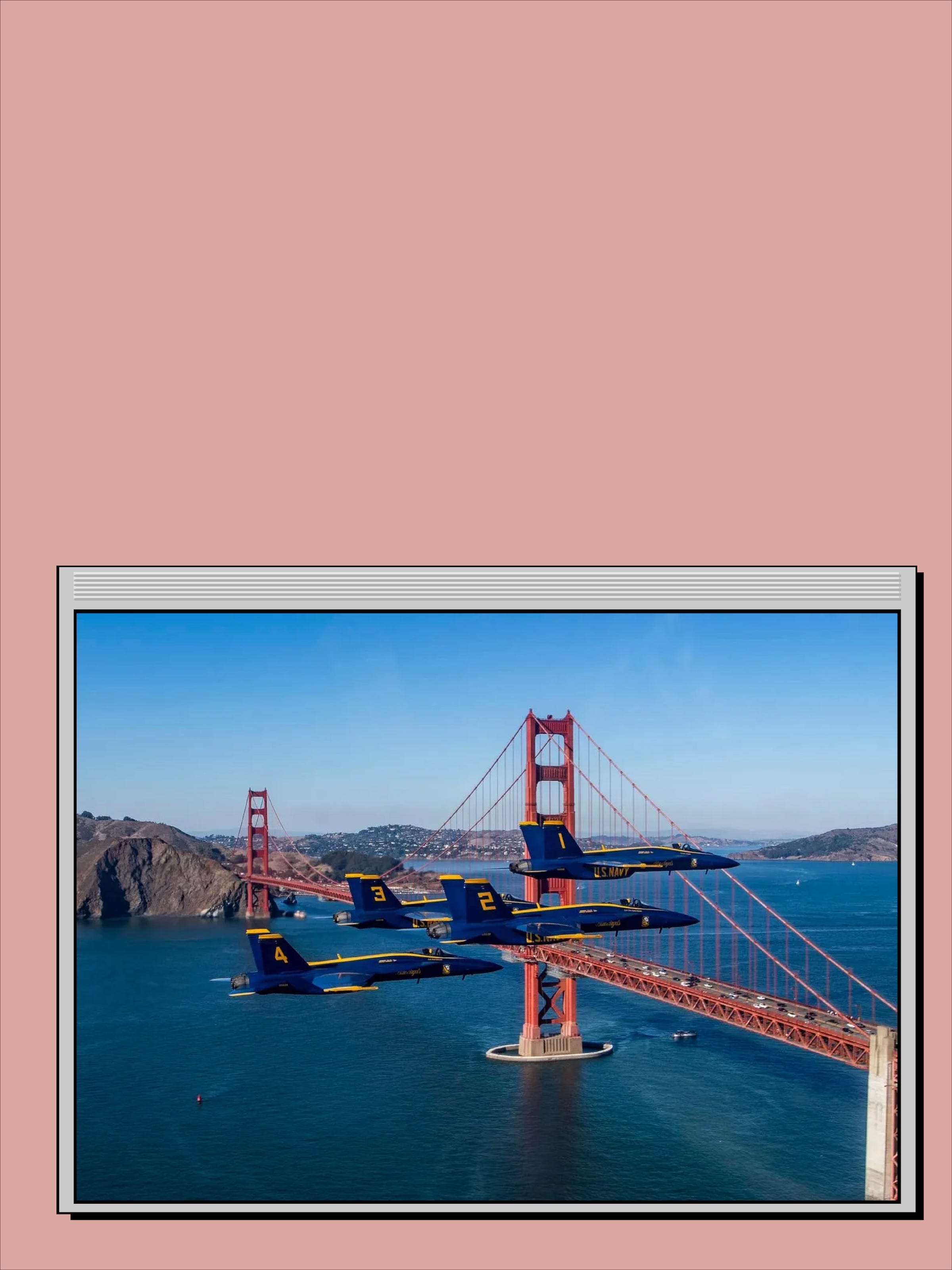
When I first found out about it, I assumed that it was a longtime San Francisco tradition stretching back to the Twenties or the Thirties. No: it was invented in the Eighties. It’s preposterous to me.
MP: They got that big old jet, and the big plane that comes down and does all the cool stuff.
They do. They do have the big plane.
MP: I’m pro-big plane.
I’m glad that you’re riding for Fleet Week here, Matt, I’m glad there’s a little bit of intraband friction. Keep things interesting.
I know you all have jobs, you’re normal people. Matt, you said you literally just got home from work, and you’re cooking dinner now as we’re talking.
MP: Gotta feed my wife.
I feel that, brother. But how do you guys balance work with being in a band? I know from my own experience, at a certain point there’s an inclination to make the thing that you like to do—like, to make that into your work.
HEK: It can be hard. As you say, we all have jobs. And it’s partly because we live here [in the Bay Area], and it just wouldn’t work if we didn’t [have jobs].
Music has always been the most important thing in my life, but I didn’t grow up being like, “I’m going to be a musician and make a living being a musician.” Like, I feel like this band happened because we started playing music together and then kinda stumbled into some support tours. And it was just too fun and important-feeling not to follow through and invest more time into. So we all had careers going as the band was forming, and we’re all now trying to figure out how those careers fit with the band.
And y’know, maybe at some point we’ll actually make positive money—right now, we make negative money, so our jobs aren’t going away anytime soon. At first, I was really cynical about it. The more time has passed, I’m feeling a lot more optimistic about making it work, but check back on me in six months.
Matt?
MP: What Henry says resonates a lot. A lot of us come from a similar vein of parents who are extremely supportive, but then also... y’know, it’s like the right hand supports, but the left hand sorta slaps you on the back of the head and says, like, “Get a job.” And it’s very confusing to a child, I think, to be simultaneously supported and also distracted from a musical career.
I think maybe in different capacities, we’ve all sort of approached our relationship with music in this kind of conflicted, traumatized way.
HEK: Jesus, Matt!
MP: Well, okay, I’ll speak for myself. Maybe not. I’m sorry, I’m appropriating the vocabulary. I don’t mean to do that. But whatever, a spade’s a spade…
The point that I’m trying to make is just that it feels really nice to exist in that space [where the value of making music is recognized]. I also think that there’s a certain amount of pragmatic reality. You think about Beethoven, or Haydn, or Tchaikovsky, or Wagner—all of these dudes from the 19th century who wrote these incredible symphonies, like they all had patrons, right? There has always been a kind of distance between the process of making music and the act of actually being able to practice as a musician. And I think we’re trying to navigate what that looks like.
I mean, personally, I can’t just go out and starve myself for weeks on the road, even though I have a lot of respect for people who do that. But we’re trying to find our own relationship with music, and to bring the best version of ourselves that we can, and to find a healthy balance.
I mostly just want to keep making music. I finally had a conversation with my mom the other day where she was like, “Oh, you have a sold out show in London.” We haven’t quite cracked her, but we’re working on it.
You gotta hit her with the Pitchfork review. Or maybe if you’d gotten a Best New Music—that would’ve been one thing…
MP: Yeah, seven point seven.
I thought it was like an eight-one.
MP: The listener score maybe…
I can’t even see the scores anymore because they blur them out like it’s pornography.
MP: Yeah [laughs].
HEK: It was a very nice review.
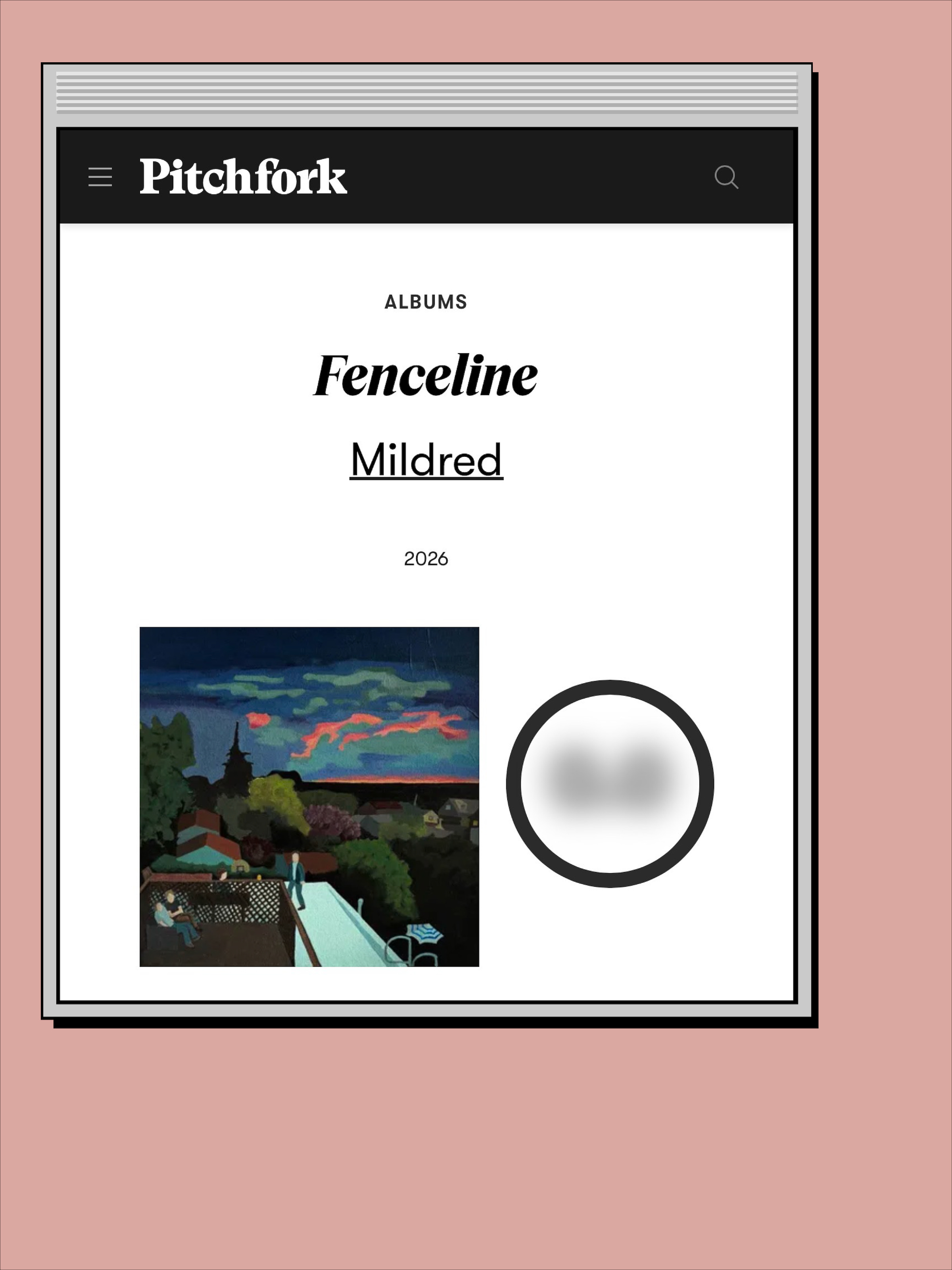
It was a nice review.
HEK: We thank the writer for writing it.
Absolutely, it was great. Jack, how are you feeling about all this?
JS: It’s a lot of new questions that I wasn’t really thinking through two months ago, just with all the new opportunities that have shown up since the release of the album. And yeah, I’m really excited about playing more music and growing the band. At the same time, I’m finishing up a PhD in physics right now, which is something that I’ve kinda planned on being my career for the last seven, eight years. I’ve put a lot of work into pursuing a career in that.
So I’m also contending with whether these new opportunities for the band are going to steer me in a new direction. Like Henry, I’ve always felt like music’s the most important thing in my life, even if it’s not something I was ever trying to pursue in a professional capacity.
Last question to end on, because I’m coming from San Francisco, and I know you guys are around—Henry, I just saw you and Will the other night at the Vetiver show here in the city. What’s your read on the Bay Area scene at the moment? Fifteen, twenty years ago, there was a real vibrant rock scene. And then throughout the 2010s, that kinda got washed away as the techies invaded. What does it feel like to be a Bay Area band in 2026?
JS: When we started, we had no feel for what the scene was—if there even was anyone. Part of that was just like, the nascent stages of the band were playing together at our house during COVID. And we weren’t even able to book many shows locally, because we hadn’t recorded anything.
As we’ve started playing some more, it’s been interesting to kinda plug into this whisper network of bands that do exist. It’s not a scene that’s visible from someone on the outside trying to scope it out, but we’ve found a surprising number of really good bands who are in our boat of like, maybe they’re not pursuing music full time, they’ve got jobs, they’re in school, but they’re really passionate about music on the side.
But in [terms of] cost of living, it’s not an easy place to pursue music full time. And I think those things are super correlated: the number of bands here, and how hard it is to play music and not work full time.
HEK: Yeah, I think I think it’s cost of living and then everything that comes with that. Like, if you drive into San Francisco on the Bay Bridge and you see all those billboards…
Oh yeah.
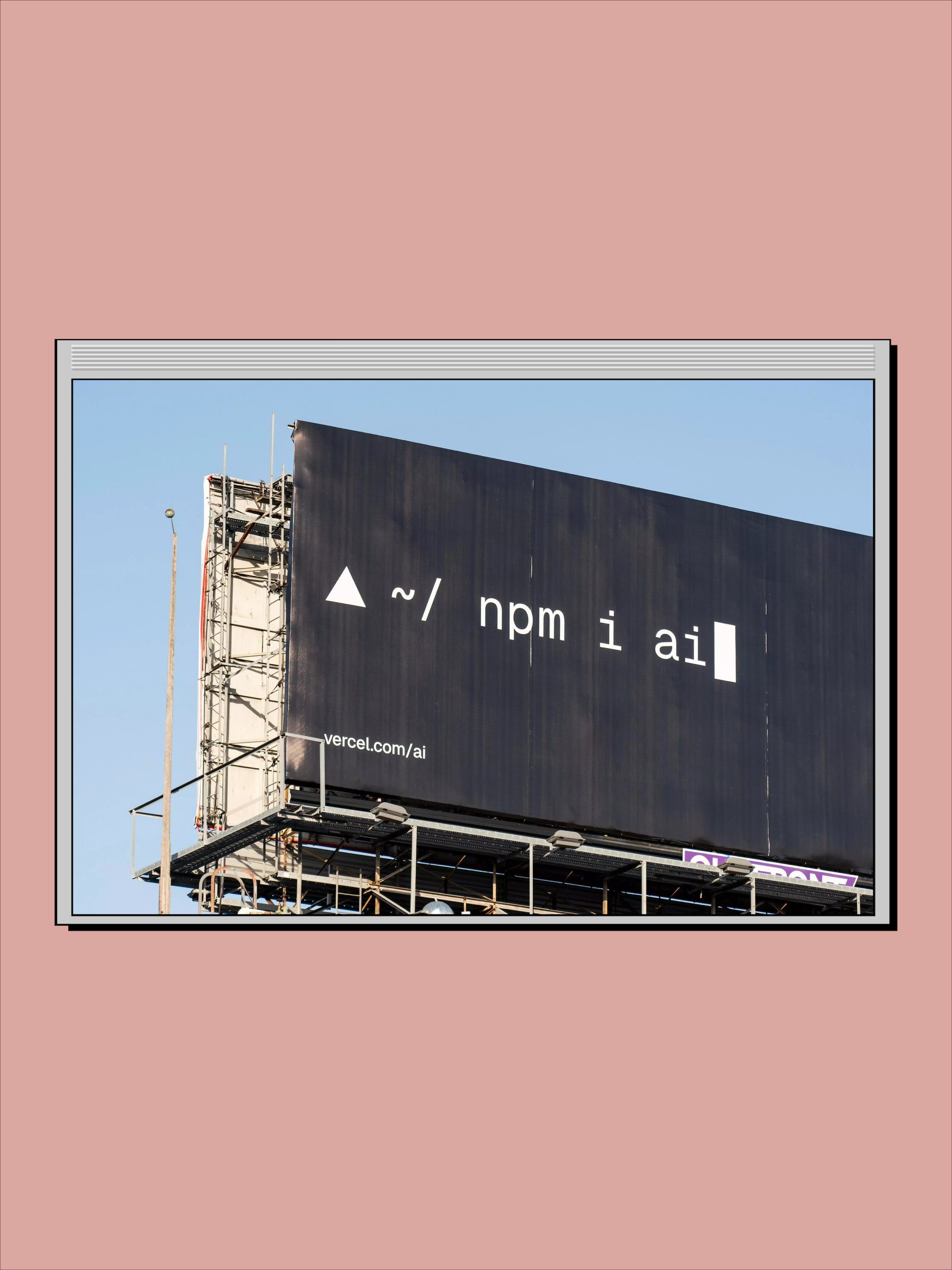
HEK: Yeah, there’s just certain parts of the city that you can imagine being an artist and trying to make it and feeling like this city’s not for you,, and feeling pissed and dejected. But then at the same time, it’s this rich cultural node for the country and the world and it has this incredible history. And there are still really great bands that are slumming it and have been doing it forever here.
MP: I’m very suspicious of scenes in general. Like, I think that creativity comes from having something to respond to. It doesn’t have to be other people having the same thoughts that you have. I think it’s obviously value-added to have other people hearing what you have to say and amplifying it. But in a lot of ways, what’s been nice about this networked universe that we’ve created is like, you can do that from a remote village in Portugal and still have something valuable to contribute.
I’ve lived in a few different places, and I feel like [the Bay Area] has, for better or worse, become my home. And I’m very unhappy a lot of the time living here and like, I commute into San Francisco most days, and I have pretty intense experiences many days of the week—both highs and lows. I don’t know. For me, Mildred is very much a balm for all of this stuff.
I really do think that there are a lot of people here who are actually invested in culture at large, that there is a desire for it. But the majority of this, let’s say, “consumer class” who live here, they don’t really know how to participate in that. But I really do think there’s tons of cool people here doing cool stuff. And the city’s going through a transition that’s… it’s like a slow march towards something that’s exciting.
From where I sit, I just wanna keep doing the things that make me happy, that I’m curious about, that I’m excited about. And as long as I can keep the machine around me whirring and, y’know, feed my wife dinner when she’s hungry, then I’m happy, and I’m winning, and I feel blessed.
I think there’s desire. People understand this place is special, and that’s an exciting territory to live in, to be in.
I feel that. It’s a part of the country—the Bay Area in general, not just San Francisco—that has such a rich musical heritage, from the history of rock music to the Fillmore jazz scene. But it feels like there isn’t “the thing” right now, it’s kinda up in the air—which is not to say that it’s gone and never coming back. I like the optimism.
MP: It’s like the Benedictine monks, or the Chinese. They think in centuries.