Rich Text: NEPTUNE'S CORE
A conversation with Chicago's double-sister garage rock quartet

Welcome back to Rich Text, an interview series.
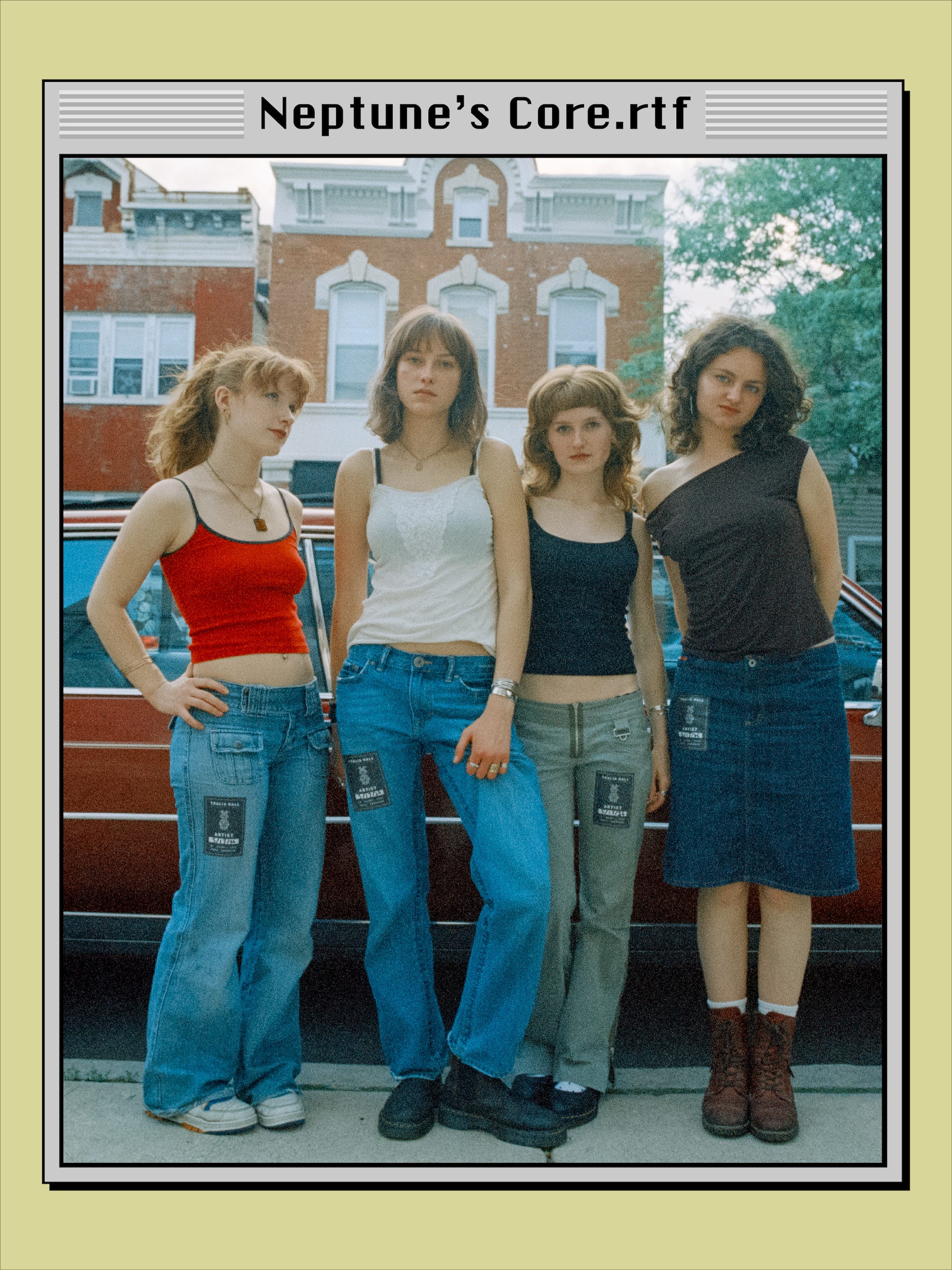
2026 has been a shaky year for big releases from brand name rock acts, but I’ve found this to be a particularly rewarding year for up-and-comers. Case in point: Neptune’s Core, a Chicago quartet composed of two sets of sisters. Earlier this month, Shuga Records released their debut album “Pivot,” a sweet-and-sour set of garage rock songs that somehow triangulates Olivia Rodrigo, Vivian Girls, and The Strokes. Lead single “Lemon Car” is one of the best songs I’ve heard all year.
Recently, I caught up with three-fourths of the band: Sofie Richter, Jackie Cywinksi, and Kaitlin Cywinksi. During our conversation, which has been edited for length and clarity, we spoke about telepathic sibling bonds, the Chicago scene, being in a rock band while still going to college, and more.
So the band is two pairs of sisters. What is that like? Because I have sisters, and I know what it’s like with them—a loving relationship, certainly, but occasionally a fractious one. How is it being in a band not only with your own sister, but also with two others who are also sisters? It seems like a complex dynamic.
Jackie Cywinski: I feel like you phrased this question a little differently than most people do. I mean, it’s definitely our superpower. We’re telepathic with each other and we know each other so well, and that makes it easier to work together and be honest with each other about the hard things. But I like that you asked about what it’s like to observe the other sisters too. Because sometimes Sofie and Hannah will be fighting or something, and Kaitlin and I know just like, let them do their thing, they’ve just gotta hash it out. And then instantly we’ll be back to being best friends, cuz that’s how sibling fights work.
I think our dynamic is really different in the studio. We’ll all kinda be mean to each other, and then people don’t know we’re siblings. Then we’re like, “No guys, it’s okay. This is just how it is.”
Kaitlin Cywinski: Sofie and I have known each other since fourth grade, so at this point it feels like we’re sisters as well. We understand each other really well. I think that that really helps while creating and crafting music.
Sometimes writing a song and proposing a part can feel vulnerable. Especially if Sofie brings in this melody, sometimes it’s like, “Oh, as a drummer, I don’t want to play some bullshit that’s going to ruin this beautiful thing.” But I never really feel pressured that I could do something wrong. It always feels like a safe space to experiment, explore and communicate.
Sofie Richter: It’s nice to always expect honesty. When we’re trying new parts, there’s no flattery, we don’t lie to each other. If it’s not working, we’ll say that. I think it really helps the songwriting process.
KC: It’s shockingly rare, though, how little we have to be like, “This sucks, don’t do that.” We’re usually able to lock in and get a flow going pretty quickly. I think that also has to do with us being sisters and knowing each other so well. Like Jackie and Sofie were both mentioning, there’s a kind of telepathy that feels almost magical or spiritual between the four of us. It just comes very naturally and instinctively.
Do you all come from a similar set of musical influences and other artists that you like? Or are you each kinda bringing different flavors?
JC: I think we all individually bring different genres and influences. Growing up, none of our parents played music at all, but we were always listening to music around the house. I’d say for Kaitlin and I, it was a lot of Wilco for sure.
With us, the Cywinski sisters, and then the Richter sisters, it’s like a Venn diagram. There’s a lot of overlap—like David Bowie—but like, my dad is also obsessed with Prince. So there’s a lot of this flashy person in the forefront that I think we get influences from in some of our songs.
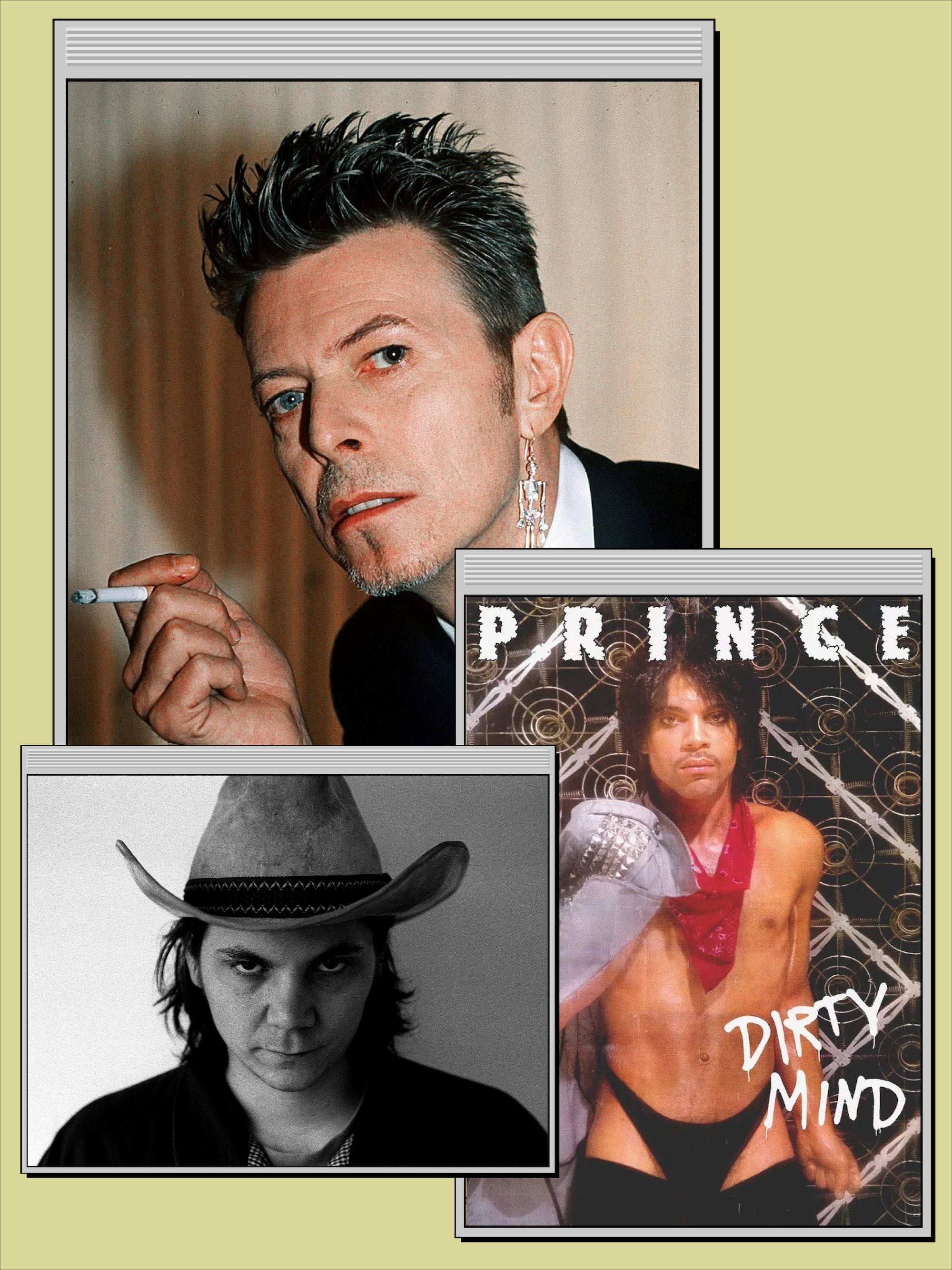
SR: My mom really appreciates a good female vocalist. She loves Bonnie Raitt and a lot of musical theater. And my dad loves classic rock, so we’ve been raised on that—like Led Zeppelin.
KC: In terms of musical backgrounds, Jackie, Sofie, and Hannah [Richter, Neptune’s Core bassist] all started playing some instrument at a young age, primarily classical music. When I started drumming around 12 or 13, that was mostly just messing around. But then in high school, I got pretty into jazz and I was in a couple of jazz programs. So all four of us are either classically or jazz trained, which I think comes through in the music.
I feel like being a jazz musician really helped me be able to formulate a melodic drum part instead of just purely thinking of my role in the band as a rhythmic element. If I’m listening to my own drum part back, I like to be able to hear the song as a whole within my part. I think that helps add to the song as a full piece. You can build emotion with a drum part, too.
SR: It’s interesting, because so much of our learning years was spent together in the same room. We took lessons, but I feel like a lot of the learning happened when we were starting to write songs together and step on stage at a young age. There was a learning curve to being a performer—having energy on stage and tapping into the performing version of yourself. It’s cool that we’ve been able to learn together, because we all have the same foundation.
KC: Playing with anyone else is not like playing with Sofie, Jackie and Hannah. I’ve tried to play with some other people a couple times, and unless it’s a completely different style of music, it’s like I can’t write with anyone else. It’s so interesting.
Yeah, what’s the songwriting process like for you guys? Sofie, I think you’re the primary songwriter, but it sounds like it might be a little more collaborative than that.
SR: Usually I’ll get a melody in my head and then I’ll have a lyric or two that I’m thinking of. Lyrics come last for me. Sometimes I’ll pitch the song without lyrics too, with like filler words. And I purposefully leave it sorta empty for Kaitlin’s part and Jackie’s part and Hannah’s part. And they all write their own parts.
I’ll have an idea for the direction of the song, and I’ll try to communicate that. But they kinda just read my mind, or we enter this flow state where they’re able to write the perfect part, the part I was hoping they’d write. There’s a lot of trust.
It’s changed over time, too. On the first song we wrote, I didn’t play guitar at that point. So I just approached Jackie with this vocal melody and I asked her to write a guitar part to go with it, which is so unconventional to do it that way. I think writing it that way helped make it so interesting.
KC: A lot of the songs on this record were really constructed in the studio, which was not typically something we’d done before. Usually when we had gone in the studio in the past, it was because we just had a bunch of songs and we wanted to record them. But with these songs, we were a lot more intentional. Sofie would send us her playing the melody and singing some lyrics with an acoustic guitar, and we all just listened to them and started implanting the ideas in our minds.
I think some of the songs on this record are four years old, maybe even five. And then some of them were written within the last couple months. So it’s interesting to see the difference, but the album still feels cohesive.
JC: There was a period of time where we were all in different locations. And this was our first time trying to write with that distance, which kinda made it hilarious.
I specifically remember this with the song “Arc”—Sofie sent over her vocal part and the acoustic guitar. And I was kinda like, “What is this song? Like, this is not good.” But then I tried to write a vocal part to it, and “Arc” is literally one of my favorites on the record now. It was funny trying to figure out how to write with that distance because we’re normally so close together.
SR: Yeah, I remember the difference between getting that Dropbox recording versus when we were first in the studio and I finally got the chance to play it in person. I feel like it’s a testament to the magic of being in person together and having that creativity flow in the room. We churned out like four songs that day.
I assume you cut the record in Chicago?
SR: Yes.
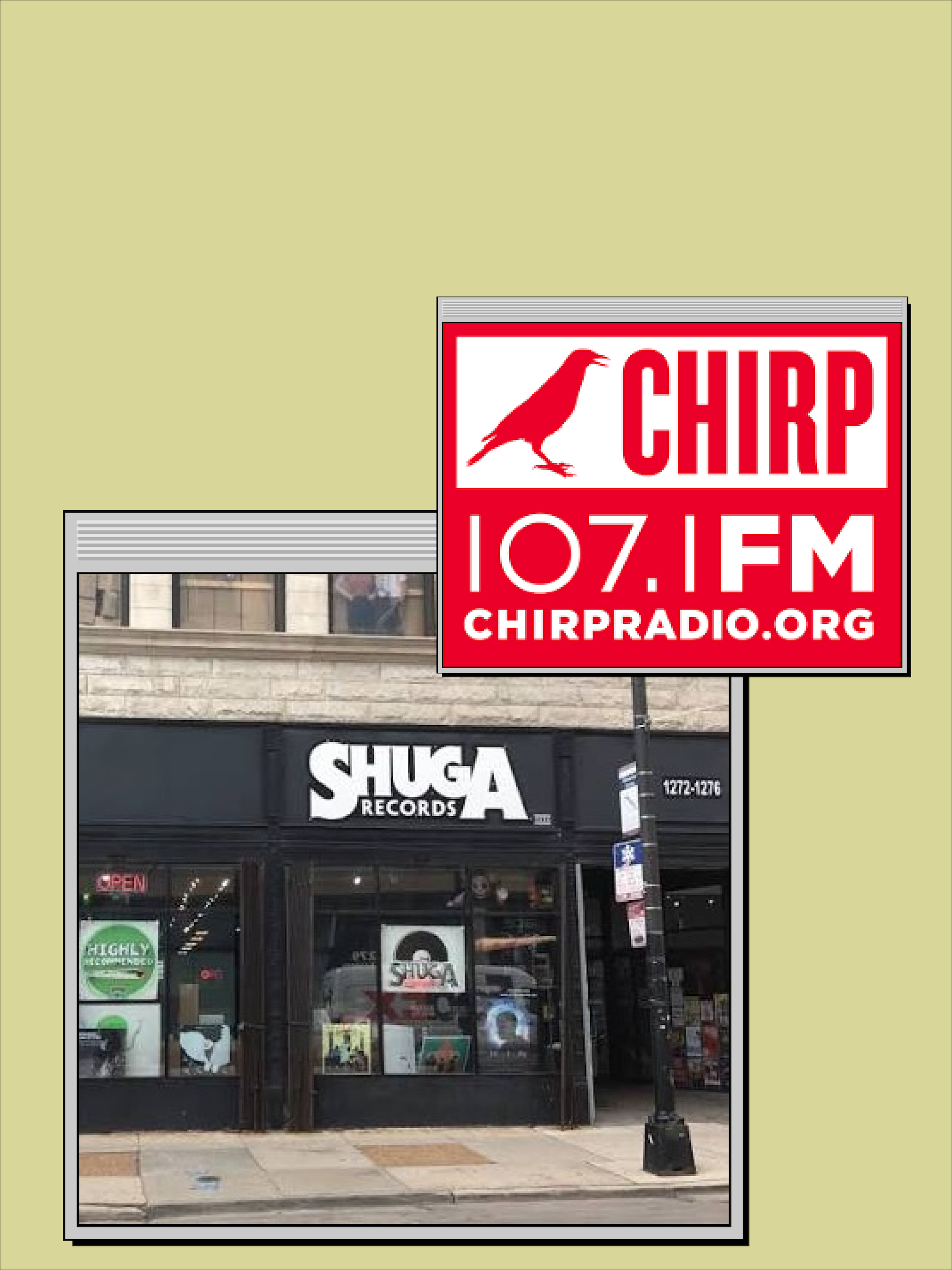
What’s the scene like these days? I was there a couple months ago, and I came by Shuga [Records, record store and label). It seems like a really close-knit, supportive community there.
JC: Yeah, I think Chicago is one of the best places for a band to get its footing. There are so many small record stores that are thriving, Shuga being one of them, and they put on a lot of events. There’s an independent radio station, CHIRP, that is super successful. And I think that goes to show that everybody who lives in Chicago loves music and loves the arts.
In terms of the bands, there’s just endless music here. I feel like there’s so many people to be inspired by.
KC: When you go to a show, you look to your right, you look to your left, and you’re going to know at least one person there. It’s pretty cool. Even though in the summer, it seemed like every Friday night it was like, “Wow, there are three shows that I really want to go to.”
It’s crazy, but it never feels competitive in that sense. Everyone’s hoping for the best for everyone, which I feel sets it apart from what we’ve heard about, like, maybe, I don’t know...
Los Angeles or New York, yeah. You can say it, it’s fine. [Laughs]
SR: It’s very collaborative. I can think of a few musicians who play multiple instruments and will be on stage with a couple different bands. Everyone’s just here to play music together and support each other.
It seems to me—again, as a total outsider—that Chicago lacks a little bit of the industry presence that exists in places like New York and Los Angeles. It’s good to have industry presence occasionally, because in the world we live in you do ultimately need to figure out a way to make money, whether it’s through your art or through a job. And then if you have another job, that impacts your ability to make the art—whatever, yada yada. That’s another conversation.
But I think the lower degree of that in Chicago seems like it leads to a much more robust, natural scene.
SR: Definitely. It’s very genuine.
What are you guys planning in terms of a tour?
JC: We have our official album release show a bit in the future, December 29th. We’ll be headlining Lincoln Hall in Chicago. We’re going to have Niko Capetan from Friko and Sleeper’s Bell opening for that. And then before that on October 9th, we’re doing a Rough Trade in-store and vinyl signing. Those are our big two things. And then hopefully some touring next summer.
KC: You might think, “You’re releasing your album in August, why the heck is the release show in December?” That would be a super normal thing to think! But we’ll have some more things building up. It’s been interesting planning to keep momentum building while we’re all still in school during the fall and spring semesters.
That was another question I wanted to ask—are you all still just in college?
SR: Mm-hmm. Yeah.
Damn. So you’ve got to figure out how to do the rock band thing around showing up to classes and stuff.
KC: Exactly, that’s where the long distance comes in. Jackie will be out in New York, Sofie’s in Montreal, and then I’m in central Illinois. And Hannah’s still in Chicago.
And how long have you guys been playing together?
JC: It’s hard to put a number on it. I mean, just for fun? Since I was in like, third grade. But more seriously, I’d say three or four years.
SR: I’d say we started writing our own music like eight or seven years ago.
KC: In terms of taking it seriously and realizing that writing music, performing it, recording it is something we wanted to take seriously, I would say that happened at the 2023 show that we opened for Dehd at The Empty Bottle. It was like December 29th or something. That was like, holy cow.
But then I would say with this album, I feel like we’ve cemented more of a brand and sound that we really want to be presenting as a fresh, first kind of thing. I think doing it for seven or eight years, sometimes it gives the impression that we’re still 13 and messing around.
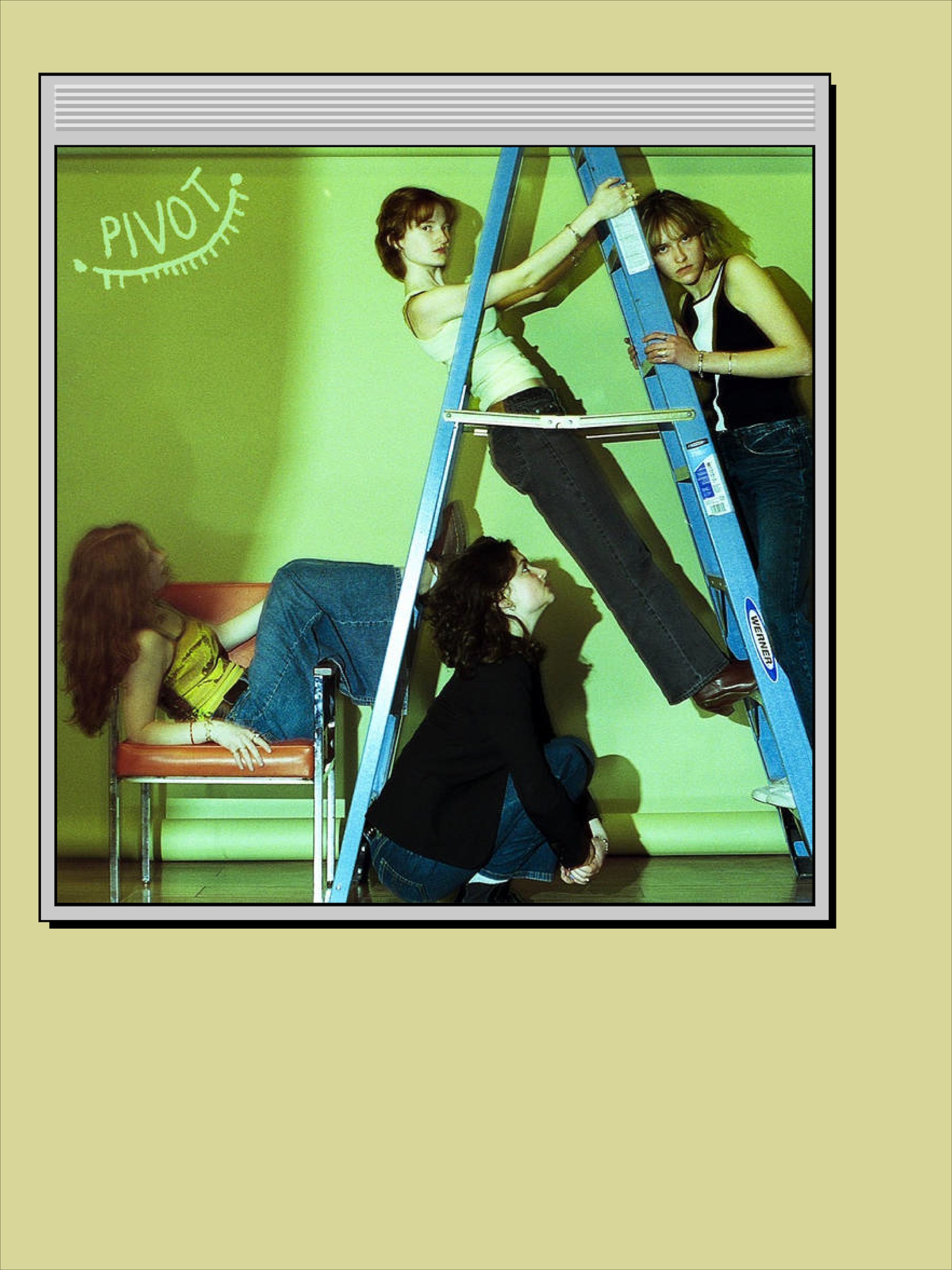
Pivot feels very self-assured, like you’ve already worked out a lot of questions about what the band is and how it should sound. In many cases, that takes time.
Geese is a great example, for instance. They had a couple of early records that are cool, but they don’t really sound like 3D Country or Getting Killed, where all of a sudden we know what this band is. It’s probably a little too early to make those comparisons with you guys, but I feel like you’ve already landed on what this whole thing is.
JC: Thank you! That’s honestly exactly what we were going for, and part of the reason we named it Pivot. It’s kind of a “pivot” in the sound for us, and we’re marking it as our debut album because we want this record to be people’s first impression of us. and just like this new vision for who we are as a band. So yeah, we definitely wanted a clean slate and Pivot is the perfect thing to just, you know, get people’s attention with.
Perfect title, you nailed it.
I’m always curious about this—what song on the record are each of you most proud of?
SR: I think “Lemon Car.” It was the one that I was most scared to show the band, just because of the chorus. Now I love it, but at first I was like, “Is this too out there?” There aren’t even any words, I’m just making these weird noises.
But I’m proud of it because it’s catchy, it’s fun, people can dance to it. I love playing it live and creating a positive vibe. And the lyrics—I don’t think about lyrics, it’s not top of mind when it comes to music—but for “Lemon Car,” I really like them. I like the metaphor, I like how it builds.
Totally agree with you on “Lemon Car.” The moment when you kick into the chorus, I was like, “Oh holy shit, there’s really something here.”
SR: Thank you.
JC: I would say “Skeleton” [is the song I’m most proud of] because it’s the one on the record that I wrote and it felt like a pretty vulnerable song that I was sorta scared to put out there. But I think it was something that the album needed, to close with something that was more intimate.
And then I really liked the guitar parts that I wrote on “More Than Yours” and “Easel.” On “Easel,” I feel like I have to be like, a metronome arpeggiating, it takes more brain power than some of the other songs. So every time I play it live, I’m like, “Damn, okay, I did it. It’s done.”
KC: The most challenging song for me to write a part for was “Bent Down, Loving More.” That song, when I listen back to it, it’s so fun and catchy, and it has a consistent rhythm. That’s probably the one I’m most proud of, even though technically it’s not a hard part to play. For some reason it was just hard for me to figure out how to play within that song.
SR: I’ll say thinking of Hannah—she’s not here—but recently it seems like she’s quite proud of “Lemon Car” and “Arc.” Especially on “Arc,” her part is genius. She did a fucking great job.
JC: I was thinking about that too while Kaitlin was talking. I was like, “Well, what’s Hannah most proud of?” And I was like, “I don’t know, but her part on ‘Arc’ is killer.”
KC: Her end of “Lemon Car” is so fun. I remember we were looking at each other because we wanted to have fun when we were playing it. That was a really good collab moment for Hannah and me. Her part is just so interesting. Like, you can just listen to that bass part and hear the song totally.
She did a great job. Shout out Hannah.
Sofie, you said a few minutes ago that lyrics come last for you, or that sometimes you write songs with placeholder language. Why do you feel that way, and how do you get to a finished place with the lyrics?
SR: I like to take it slow. I’ll be brainstorming lyrics from the first time I’m really going through a song, but I’ll save it for last because lyrics are very like… You have to be careful, or at least I feel like I have to be careful, because it can almost get cheesy when you’re trying to rhyme. I try to tread lightly and just let my subconscious speak.
Oftentimes it’s quite therapeutic too, because I won’t even be consciously aware of like, some negative shit that I’m going through. But then months after the song’s written, I’ll listen back and I’ll be like, “Shit, I was feeling that, and now I understand it.” And that’s important.
So lyrics are very special to me. Maybe that’s why I save them for last. I never want to feel like I’m forcing it.