

Rich Text: NICK KIVLEN
A conversation with a fellow Girls devotee

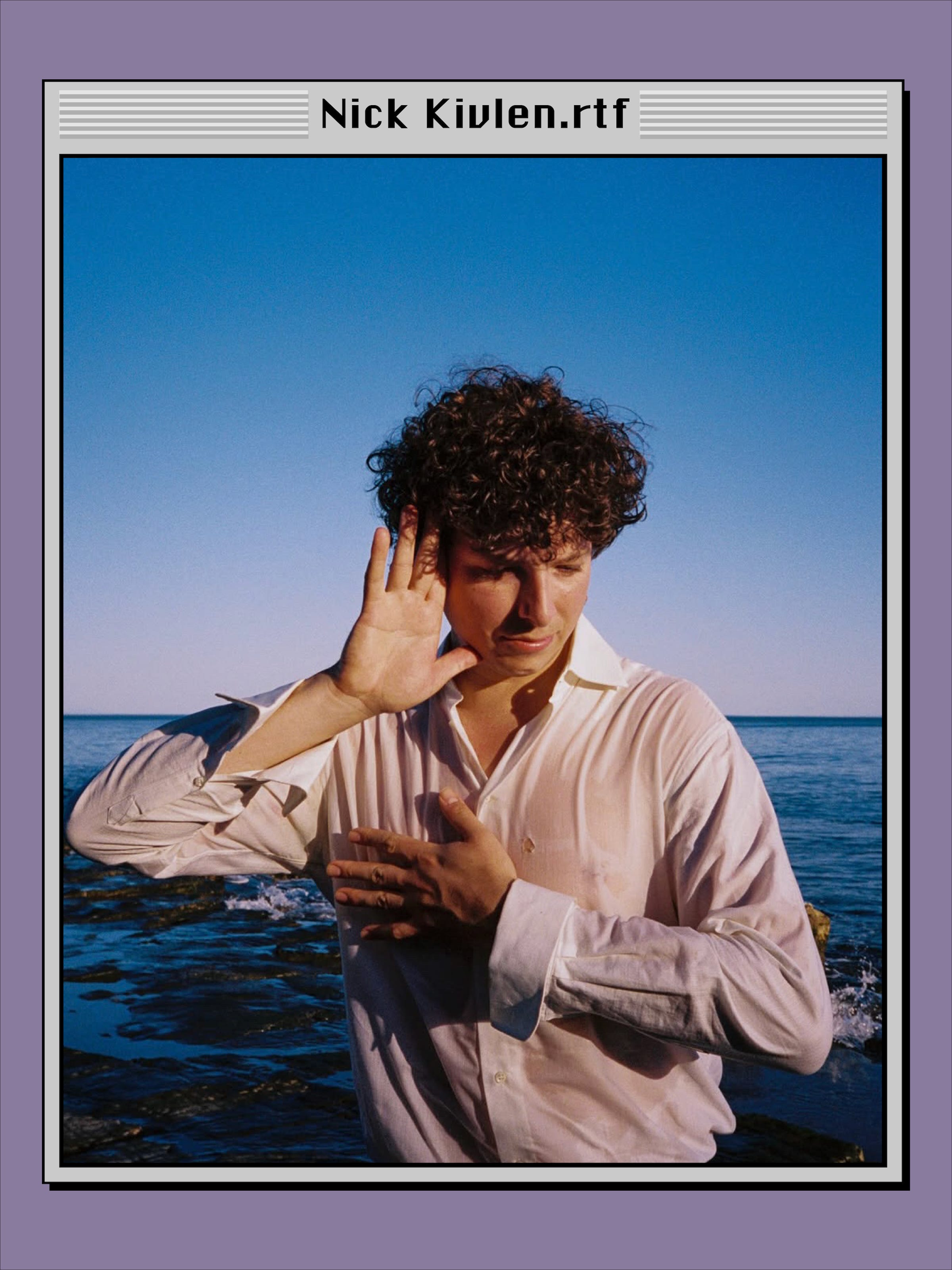
Welcome back to Rich Text, an interview series.
Nick Kivlen recently released his debut solo album “Addicted to the Sunset.” After a decade place in the hard rocking New York outfit Sunflower Bean, Nick’s first record is a true one-man-band effort. The album is a bright, breezy listen made for long summer days along the California coast (these are, not coincidentally, the very circumstances under which it was made), and anyone with fond memories of the Girls catalog will find a lot to dig here.
During our conversation, which has been edited for length and clarity, Nick and I spoke about making out-of-fashion music, proving oneself in the music industry, the future that no one wants, the Ticketmaster/Live Nation trap, being vindicated by history, and more.
We spoke just over a year ago for the last Sunflower Bean record, and now you’re back already with the Nick Kivlen solo experience. The turnaround on that seems very quick. Did you already have this cooking this time last year?
I got home from the Sunflower Bean tour and I had this album idea formulated in my mind. I took a road trip up the coast to San Francisco with my girlfriend right after the tour stopped, and I was really soaking in the West Coast lifestyle in a lot of ways.
I usually start from a place of wanting to make an album that I want to listen to that doesn’t exist already. So to answer the question, I recorded it entirely last July and August.
It strikes me as the type of thing that like, you weren’t necessarily doing a zillion different takes or moving things around in Logic. It’s a pretty warm, “in the room” type of sound.
Absolutely. I wanted it to be like the albums from the Sixties and Seventies that we love that are just full of mistakes and really sloppy. It’s amazing what was actually allowed to come out back then. You listen to some of those older recordings and you’re like, “Wow, there’s so many mistakes on this recording.”
My favorite example is usually the Rolling Stones, because they were the biggest band in the world, and their albums are so sloppy. It’s incredible. There were millions of dollars riding on those recordings, and they were allowed to be so wild.
There’s certainly plenty of that with Bob Dylan, too. But don’t sell yourself short here, Addicted To The Sunset is a really nicely put together package of songs.
I think it’s fair to say this record has a different sound than Sunflower Bean. What made this the direction that you wanted to move?
I don’t think there really was any “idea.” Maybe the limitations of working at home without a band. The real focus of the songs are the chord progressions, the lyrics, and the melodies. And I kinda found this different ingredient list: bongos, shakers, tambourines. I had this Uni-Vibe pedal that I really loved that I ran the guitar through.
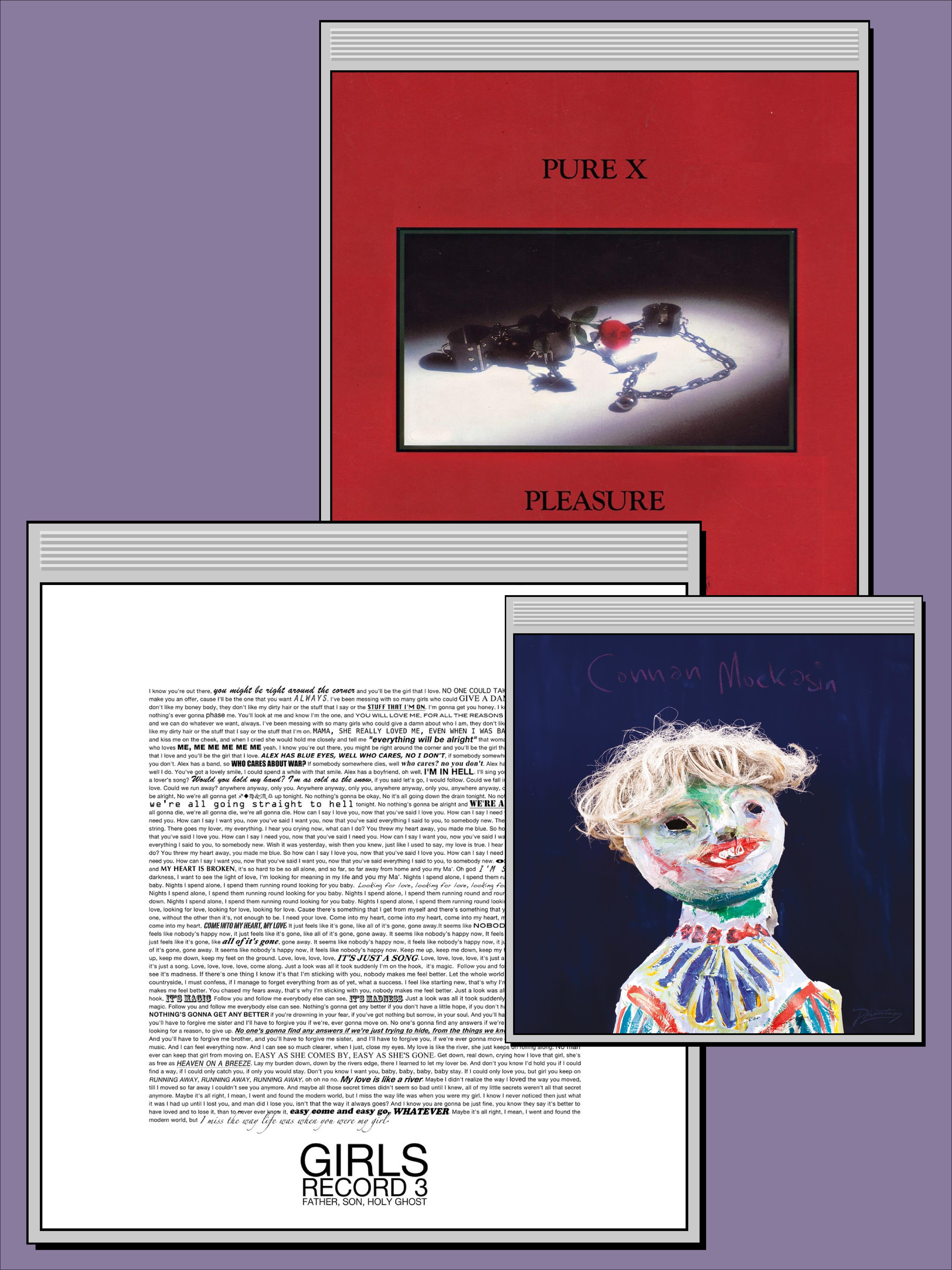
I really love all those early 2010s indie albums. Forever Dolphin Love by Connan Moccasin, Pleasure by Pure X…
I’m a huge Pure X fan. I’m so glad to hear you shout them out, because I feel like they’re kinda forgotten at this point.
I love all their albums, I think they’re one of the most underrated bands. And then Girls was a huge influence on me when I was growing up.
So I didn’t want to lead with that, but like, I’m the number one Christopher Owens superfan. And the first couple songs on this record, some of those guitar riffs that you’re playing totally remind me of Broken Dreams Club or Father, Son, Holy Ghost—just this classic, creamy sound.
It flashed me back to being 19 years old in 2011 and listening to those Girls records and being like, “Yeah man, this is what rock music should sound like.”
It’s funny, I feel the album I made is so off-trend. Underground music right now is very moody and very sparse. It’s either punctuated by like, the Alex G. pitch-shifted vocals, or Phil Collins-type drums. Everything’s very icy and cold right now.
This record ended up being a pretty positive, happy-sounding album, which is so not in vogue. But when I was in high school, the bands I thought were really cool—Deerhunter, Animal Collective, Beach House—they all had a major key, upbeat thing going on. So I think this album is a way of doing my most pure childhood influences at a time when it couldn’t be less trendy to do.
That’s what makes it the perfect time: just when everyone’s going one way, you go the other. You’re either way behind the curve or way ahead of it. Maybe both.
So did you play everything on all of these songs? This is a totally solo, all-you production?
Completely solo, to an insane degree. I was completely alone.
So it’s also a little bit like Paul McCartney’s post-Beatles stuff, McCartney or Ram, where he’s just like a one-man band doing it all himself. A homespun little collection of songs.
There wasn’t really an intention behind it. I wasn’t like, “Oh, I need to do everything myself.” It was more out of necessity than anything.
Had you been writing these songs over a period of time, and then you were ready to execute a chunk of them to make a record?
No, none of the songs existed before I started recording them. I would usually wake up in the morning and spend two to three hours writing. I had little ideas or snippets that I had going throughout the year. But I would go to the voice memo, grab a couple ideas, and then generally write the song in the morning and then record it in the afternoon. And usually not spend more than a day or two on 80% to 90% of it.
Then I mixed and mastered it at the end and added overdubs and drums. So it was usually a song a day.
That’s extremely impressive to me, as someone who like—even trying to get 500 words down on the page sometimes takes me a week because I’m such a procrastinator and a perfectionist.
I think I was just feeling really inspired in the moment. And I also felt like I had a lot to prove.
With Sunflower Bean, we started when we were 18. I feel like always having a career but never reaching a place where it’s really cushy, that crystallized me and my bandmates into really hardworking, striving musicians. And I think it’s been good for us in a creative way, because we still feel like we have a lot to prove and a lot to say. When you have a lot on your mind and all these themes and these emotions are coming to you, it’s kinda easy.
You say you feel like you had a lot to prove. Why?
I feel very lucky and fortunate for everything that I’ve been able to do within Sunflower Bean. But I always feel—and this is true of most careers—that there’s ups and downs. And we never had a moment where it was like, “Ok, we can rest now. We’re doing well enough financially and career-wise that we can kinda chill out.” It’s always been grinding.
And to come off our fourth record and an amazing summer tour with our friends Gift—when I got home, I was like, “Ok, well, I have a lot of time off right now.” I still felt like I needed to be on that treadmill.
My point is that it’s such an escape to be recording and writing music. For me, it’s literally like a drug. It’s the only time where I feel like I’m completely away from the world, away from everything. So it’s not something I need to force myself to do. Time never passes quicker than when I’m writing or recording.
That’s how it should be. Sink into that flow state, lose yourself a little bit and just turn into a vessel for ~the muse~.
It really does feel that way.
The album does have this decidedly upbeat, bright feeling to it. Is that reflective of where you’re at in your own life personally right now? Or of beautiful Southern California? Or is it just how it came out?
It’s funny, because a lot of the songs kinda oscillate between major and minor. That’s very of the Sixties. Most Beatles songs always had the minor bridge, and Elliot Smith songs, who’s a huge influence.
It’s more than just like, a song is minor and sad throughout. I was striving to write something that had that depth and just naturally gravitating towards that feeling of happiness, but then also loss and regret and angst. So even though the album sounds more major than most contemporary music, it doesn’t mean that it’s completely happy either.
Are there specific things that you’re responding to? Romantic partners, professional circumstances, deep family memories…
I think it’s like the wonder and the unwrittenness when you’re 20, and you still don’t know what being an adult is and there’s such a giant horizon and everything is malleable.
When I was 20, it was 2015 or 2016. That was a really malleable time in history, just a time of really radical change. 2016 almost feels closer to like 1966 than it does to 2026 in a lot of ways. And I don’t think anyone’s really happy with what’s happened over the last ten years.
If you’re happy with what’s happened in the last decade, you’re a scumbag.
It’s hard to even imagine scumbags being happy!
All these things, the future that’s happening that no one asked for… it’s just made me want to listen to and watch older things, things that existed before this context. I even think about that in terms of music videos or movies made before 2025, where it’s just going to be like, that is really old school.
There’s no AI. You know this music video doesn’t have AI because it was filmed in 2016. That’s going to be this giant divide in art history between things that might have AI and you need to be suspicious of, and then things that don’t.
I’ve had that same realization. It’s just a new mechanism of media literacy that we need to develop all of a sudden. Before 2022 or whenever, this was never a concern for anyone, ever. And now all of a sudden it’s a concern for everyone, all the time. It’s such a sudden and dramatic shift that we’re all still figuring out like, how do we even begin to interpret all this shit?
For sure.
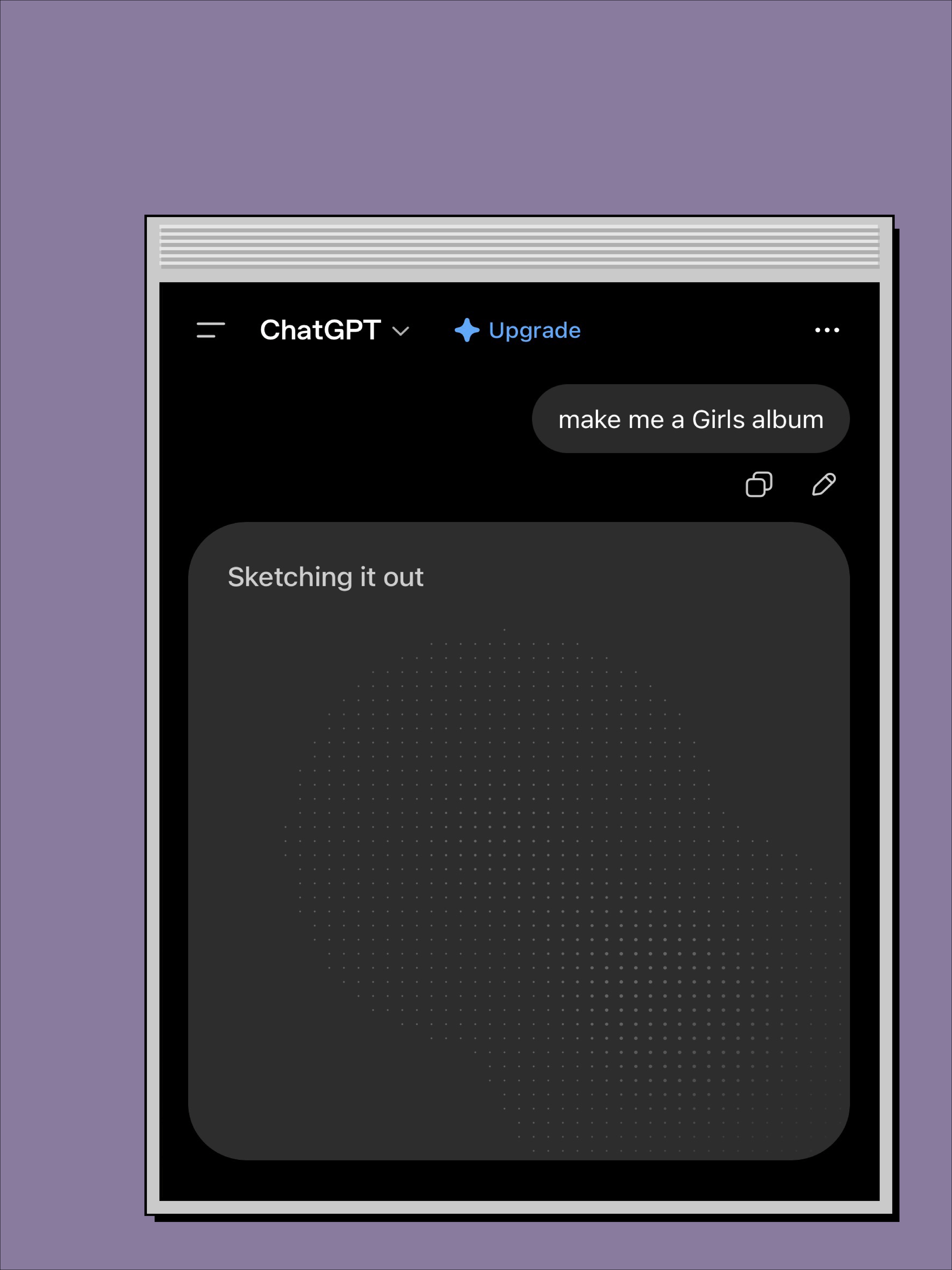
So on that note, I’m guessing these are mostly AI guitar parts, right? And you just had ChatGPT write the song lyrics?
Yeah, I was just like, “Make me a Girls album.” [Laughs]
I think you played a show at Zebulon recently, right? Was that your first Nick Kivlen solo show?
It was the third one, but the first at an actual venue.
That’s another part of the project that I’ve been having a lot of fun with. I don’t want to just do a standard rock band, I want it to be a little more malleable. So I perform with an electric guitarist and then a percussionist who’s playing bongos, shaker, tambourine, and rain stick so that the vocals can really be at the forefront in a smaller space.
The first show was on my birthday. My girlfriend Meka and I, we threw it at our friend Jeremy’s gallery, Giovanni’s Room in Hollywood. And we had a bunch of readers as openers, and it was just much more intimate and DIY and free.
It really bums me out how expensive shows are. I understand completely that like, everything’s more expensive. But I love how in Los Angeles, people are creating these more intimate settings where you don’t need to pay $25 plus venue fee for like, a Wednesday night local show. That’s really important to me.
The whole ecosystem behind live music these days seems to be a bit of a racket, at least when you get to a certain level. You’ve gotta factor in the Ticketmaster/Live Nation aspect, and then the venues that take a cut of merch. And then when people are trying to get tickets to a show and the queue is filled with bots. There’s just bullshit piled on top of bullshit.
Everything’s becoming so expensive, and live music is a commodity. Like, if you’re in New York, and your produce is coming from Mexico and Southern California, it’s like, maybe strawberries year round just isn’t going to be a feasible thing in the future. These are luxuries that we’re used to because we’ve grown up with them, but they’re really insane commodities. Maybe live music is that way too.
That’s a good point. Sort of a depressing point, but a good one.
I grew up in Los Angeles—and I know you would have had a similar experience in New York—you just take it for granted that there are 25 things you could go do on any night of the week, whether it’s a movie at a repertory theater, or a band coming through, or some sort of reading. And maybe the infrastructure that it takes to sustain an ecosystem like that isn’t totally feasible.
Yeah. Really cheerful stuff! [Laughs]

I’m glad that we’re really getting to the bottom of the reality of the rock music world in 2026.
Well, I wanted to do something to respond to that. Ignoring all the economics and creating something that’s really intimate. It’s not to like, compete on New Music Friday on Spotify. It’s just for the people who I’m friends with, or people who really want to tap in.
And I think that’s the way to do it, because as soon as you’re making music to get like, a sync in a Volvo commercial, that just leads to shitty music, inevitably. Yours might not be the most financially rewarding approach, but it is the most artistically rewarding.
For sure. And I think that the people who stick to their guns for long enough eventually are vindicated by time.
Some of them, yes.
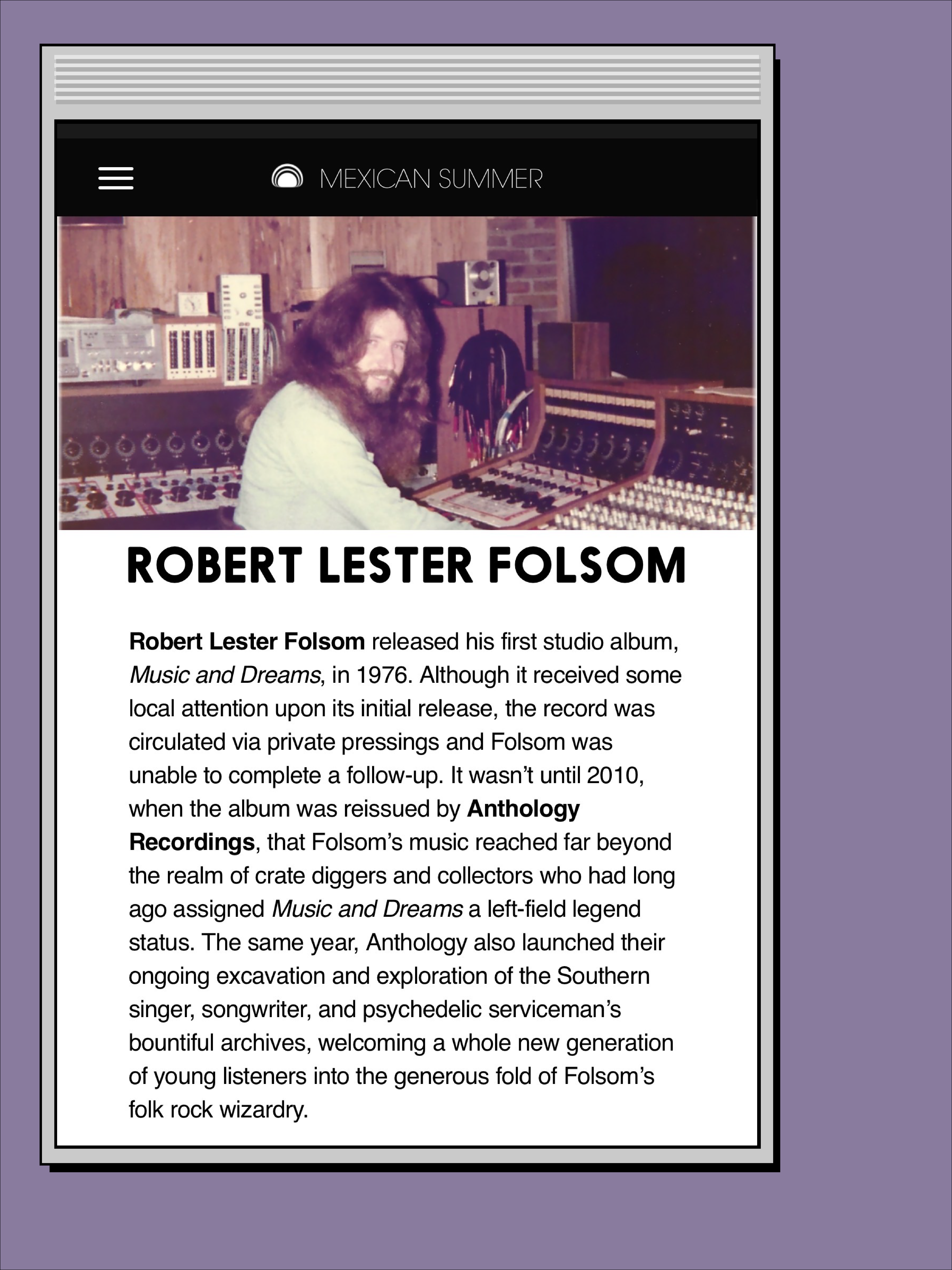
More and more so, I feel like people are going back. How many records from the Sixties and Seventies are considered lost masterpieces that have now been completely revitalized? Do you know this Robert Lester Folsom record?
I don’t think I do.
I’m just using him as one example, but I find him to be really inspirational. He made this really amazing album in 1974, and he’s touring it now as an older man, and his shows are selling out, and all his fans are in their 20s and 30s. It’s just really fucking awesome.
Well, I can’t help but ask here—I know Julia [Cumming, your Sunflower Bean bandmate] also put out a solo record. Are you guys just taking some time and following your own directions? Do you have plans one way or another?
We just played our only show of the summer last week in Milwaukee, which was awesome, and we hung out yesterday. I think we’re gonna start writing together maybe in the next coming weeks and see what happens.
Sure, so just see where it goes?
Yeah. I mean, I think the band is going to be around forever, hopefully. I would love to do it until we can’t anymore.
That’s great to hear. Because sometimes when you’ve got a couple of different creative influences in a band, and then they start doing solo projects… sometimes that leads to quietly figuring out a way to break up without saying so. But it sounds like that’s very much not the case with you guys, which is great.
I mean, it’s funny—you really do end up living through so many of the tropes of rock history. Which is embarrassing…
They’re tropes for a reason!